
Foot, ankle & calf special tests cheat sheet
22 foot, ankle & calf examination tests, grouped by the condition they test for, each with the published accuracy figures that exist for it. Click a test for what a positive and a negative result mean, and the source.
Before any test: Foot, ankle & calf red flags: the serious conditions you cannot afford to miss
Free printable version: this page as a one-page PDF, with the caution notes and sources. Sign up free to download it.
Achilles tendon rupture
Compare these tests side by side
| Test | Sensitivity | Specificity | LR+ | LR− | Verdict |
|---|---|---|---|---|---|
| Matles test | 88% | 85% | 6.29 | 0.14 | Treat with caution ?One study at high risk of bias, with only 28 people without a rupture. |
| Palpable Achilles tendon gap/defect | 73% | 89% | 6.64 | 0.3 | Treat with caution ?One study at high risk of bias, with only 28 people without a rupture. |
| Thompson (Simmonds) test | 96% | 93% | 13.71 | 0.04 | Treat with caution ?One study at high risk of bias, with only 28 people without a rupture. |
Verdicts: rule in when LR+ is 5 or more; rule out when LR− is below 0.2; both when both; weak when neither; treat with caution where the study behind the figures is weak enough that the verdict may not hold. A caution can appear with any verdict — tap ? to read it.
Ankle fracture after an ankle injury (need for X-ray)
| Test | Sensitivity | Specificity | LR+ | LR− | Verdict |
|---|---|---|---|---|---|
| Ottawa ankle rules | 98% | 39.8% | 1.63 | 0.08 | Best used to rule out ?Specificity was not pooled (median of the studies), and only 13 of the 27 studies X-rayed every patient (counted from the review's table of studies). |
Verdicts: rule in when LR+ is 5 or more; rule out when LR− is below 0.2; both when both; weak when neither; treat with caution where the study behind the figures is weak enough that the verdict may not hold. A caution can appear with any verdict — tap ? to read it.
Anterior (anterolateral) ankle impingement
| Test | Sensitivity | Specificity | LR+ | LR− | Verdict |
|---|---|---|---|---|---|
| Anterolateral impingement test (palpation + dorsiflexion) | 95% | 88% | 7.9 | 0.06 | Treat with caution ?One study of 73 people by the surgeons who devised the test; the abstract does not say what the test was compared against or how patients were chosen. |
Verdicts: rule in when LR+ is 5 or more; rule out when LR− is below 0.2; both when both; weak when neither; treat with caution where the study behind the figures is weak enough that the verdict may not hold. A caution can appear with any verdict — tap ? to read it.
Calcaneofibular ligament injury
| Test | Sensitivity | Specificity | LR+ | LR− | Verdict |
|---|---|---|---|---|---|
| Talar tilt test | 63% | 82% | 3.5 | 0.45 | A weak test on its own |
Verdicts: rule in when LR+ is 5 or more; rule out when LR− is below 0.2; both when both; weak when neither; treat with caution where the study behind the figures is weak enough that the verdict may not hold. A caution can appear with any verdict — tap ? to read it.
Deep vein thrombosis (DVT) of the leg
| Test | Sensitivity | Specificity | LR+ | LR− | Verdict |
|---|---|---|---|---|---|
| Homans' sign | Not reported | Not reported | 1.40 | 0.87 | A weak test on its own ?Never use it to rule a DVT out; a suspected DVT needs same-day medical assessment. |
Verdicts: rule in when LR+ is 5 or more; rule out when LR− is below 0.2; both when both; weak when neither; treat with caution where the study behind the figures is weak enough that the verdict may not hold. A caution can appear with any verdict — tap ? to read it.
Lateral ankle ligament rupture
| Test | Sensitivity | Specificity | LR+ | LR− | Verdict |
|---|---|---|---|---|---|
| Delayed physical examination at day 5 (van Dijk) | 96% | 84% | 6 | 0.05 | Treat with caution ?Single study; only patients with a positive delayed examination or arthrogram had surgery, which flatters sensitivity. |
Verdicts: rule in when LR+ is 5 or more; rule out when LR− is below 0.2; both when both; weak when neither; treat with caution where the study behind the figures is weak enough that the verdict may not hold. A caution can appear with any verdict — tap ? to read it.
Lateral ligament (ATFL) injury
| Test | Sensitivity | Specificity | LR+ | LR− | Verdict |
|---|---|---|---|---|---|
| Anterior drawer test (ankle) | 54% | 87% | 3.97 | 0.54 | A weak test on its own |
Verdicts: rule in when LR+ is 5 or more; rule out when LR− is below 0.2; both when both; weak when neither; treat with caution where the study behind the figures is weak enough that the verdict may not hold. A caution can appear with any verdict — tap ? to read it.
Mid-portion Achilles tendinopathy
| Test | Sensitivity | Specificity | LR+ | LR− | Verdict |
|---|---|---|---|---|---|
| Royal London Hospital test | 54% | 86% | 3.84 | 0.54 | A weak test on its own ?Case–control studies, partly against people without symptoms: tends to overestimate accuracy. |
Verdicts: rule in when LR+ is 5 or more; rule out when LR− is below 0.2; both when both; weak when neither; treat with caution where the study behind the figures is weak enough that the verdict may not hold. A caution can appear with any verdict — tap ? to read it.
Midfoot fracture after an ankle or foot injury (need for X-ray)
| Test | Sensitivity | Specificity | LR+ | LR− | Verdict |
|---|---|---|---|---|---|
| Ottawa foot rules | 99% | 37.8% | 1.59 | 0.08 | Best used to rule out ?Specificity was not pooled (median of the studies, very wide: the middle half of studies ranged from 25% to 70%), and only 13 of the 27 studies X-rayed every patient (counted from the review's table of studies). |
Verdicts: rule in when LR+ is 5 or more; rule out when LR− is below 0.2; both when both; weak when neither; treat with caution where the study behind the figures is weak enough that the verdict may not hold. A caution can appear with any verdict — tap ? to read it.
Morton's neuroma
| Test | Sensitivity | Specificity | LR+ | LR− | Verdict |
|---|---|---|---|---|---|
| Modified web-space tenderness test (thumb-pad palpation) | 96% | 100% | not calculable (specificity 100%) | 0.04 | Treat with caution ?The 100% specificity rests on a single foot without the condition. |
Verdicts: rule in when LR+ is 5 or more; rule out when LR− is below 0.2; both when both; weak when neither; treat with caution where the study behind the figures is weak enough that the verdict may not hold. A caution can appear with any verdict — tap ? to read it.
Osteomyelitis under a diabetic foot ulcer
| Test | Sensitivity | Specificity | LR+ | LR− | Verdict |
|---|---|---|---|---|---|
| Probe-to-bone test (diabetic foot ulcer) | 87% | 83% | 5.12 | 0.16 | Moderate in both directions |
Verdicts: rule in when LR+ is 5 or more; rule out when LR− is below 0.2; both when both; weak when neither; treat with caution where the study behind the figures is weak enough that the verdict may not hold. A caution can appear with any verdict — tap ? to read it.
Plantar fasciitis
| Test | Sensitivity | Specificity | LR+ | LR− | Verdict |
|---|---|---|---|---|---|
| Windlass test | 32% | 100% | not calculable (specificity 100%) | 0.68 | Rule-in strength not calculable (no false positives seen) ?One small study: no false positives, but it missed most cases. |
Verdicts: rule in when LR+ is 5 or more; rule out when LR− is below 0.2; both when both; weak when neither; treat with caution where the study behind the figures is weak enough that the verdict may not hold. A caution can appear with any verdict — tap ? to read it.
Syndesmosis (high ankle) sprain
Compare these tests side by side
| Test | Sensitivity | Specificity | LR+ | LR− | Verdict |
|---|---|---|---|---|---|
| Dorsiflexion–external rotation test | 71% | 63% | 1.92 | 0.46 | A weak test on its own |
| Squeeze test (syndesmosis) | 26% | 88% | 2.15 | 0.84 | A weak test on its own |
| Syndesmosis ligament tenderness (palpation) | 92% | 29% | 1.3 | 0.28 | A weak test on its own |
| Unable to perform single-leg hop | 89% | 29% | 1.25 | 0.37 | A weak test on its own |
Verdicts: rule in when LR+ is 5 or more; rule out when LR− is below 0.2; both when both; weak when neither; treat with caution where the study behind the figures is weak enough that the verdict may not hold. A caution can appear with any verdict — tap ? to read it.
Tarsal tunnel syndrome
| Test | Sensitivity | Specificity | LR+ | LR− | Verdict |
|---|---|---|---|---|---|
| Dorsiflexion–eversion test (tarsal tunnel) | 82% | 100% | not calculable (specificity 100%) | 0.18 | Treat with caution ?Cases were surgical and controls were healthy volunteers, which inflates accuracy. |
Verdicts: rule in when LR+ is 5 or more; rule out when LR− is below 0.2; both when both; weak when neither; treat with caution where the study behind the figures is weak enough that the verdict may not hold. A caution can appear with any verdict — tap ? to read it.
Commonly taught, no reliable figures yet
These tests are widely taught, but no reliable accuracy figures have been published for them, so they have no verdict and are left out of the calculator and the strongest-tests list. Each page shows how the test is done and what the research says.
- Mulder's sign (Morton's neuroma): The three studies that measured it disagree widely (sensitivity 29% to 94%), and a systematic review judged every result weak.
- Single-leg heel raise test (Tibialis posterior tendon dysfunction): No study measuring its sensitivity and specificity against a reference standard could be found; the only data are its reliability, a link with tendon changes on ultrasound, and how often it was abnormal in feet already found to have the condition at surgery.
- Tinel's sign at the tarsal tunnel (Tarsal tunnel syndrome): Studies report only how often the sign is positive in people already diagnosed (from 1% to 100% across 28 studies); none tested it in people with other causes of foot pain, so specificity and likelihood ratios cannot be worked out.
LR+ says how much a positive result moves the probability up; LR− how much a negative moves it down. Tests for the same problem are rarely independent, so their figures should not be multiplied together. To turn a figure into a probability for your patient, use the probability calculator.
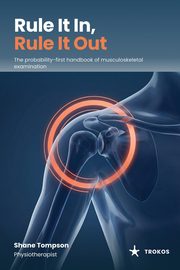
Get the book for spotting a high ankle sprain, and knowing when the Achilles is torn
These pages give the published figures. Rule It In, Rule It Out adds, for the tests in the chapter ‘The ankle and foot’: captioned drawings with the exact positions, the Rule-In / Rule-Out bar and evidence dots, a fuller interpretation of each test, and the clinical reasoning on which tests to use and in what order.
Look inside the book: free sample pages
Coming November 2026: 330 pages, paperback and PDF. Launch offer: subscribers get the PDF for A$39 instead of A$49, for the first two weeks after publication. Be first to know at launch
Condition pages: Achilles tendon rupture · Ankle fracture after an ankle injury (need for X-ray) · Anterior (anterolateral) ankle impingement · Deep vein thrombosis (DVT) of the leg · Lateral ankle ligament (ATFL) injury · Mid-portion Achilles tendinopathy · Midfoot fracture after an ankle or foot injury (need for X-ray) · Morton's neuroma · Osteomyelitis under a diabetic foot ulcer · Plantar fasciitis · Syndesmosis (high ankle) sprain · Tarsal tunnel syndrome · Tibialis posterior tendon dysfunction · all, A to Z
One study, one test, once a month
Rule It In is a free evidence letter for musculoskeletal clinicians: one recent study explained, one examination test with its real numbers. From Trokos, publisher of Rule It In, Rule It Out.
Free when you confirm your email: this page as a one-page printable PDF, the same sheet for every other body region, and the one-page sheet of the strongest special tests to rule in and rule out.
Launch offer for subscribers: the PDF edition of Rule It In, Rule It Out for A$39 instead of A$49, for the first two weeks after publication. Sign up free to get the code on launch day.
By subscribing you agree to receive Rule It In by email, about once a month. You will get a confirmation email first, and nothing is sent until you click it. Your address is stored by Kit (Kit.com, United States) and used only for this newsletter and the subscriber launch offer; Kit records which issues are opened and which links are clicked. Unsubscribe with one click in any issue. Privacy.