
Special tests library › Wrist & hand
Clinical tests for De Quervain's tenosynovitis
Painful irritation of two thumb tendons (abductor pollicis longus and extensor pollicis brevis) and their sheath where they pass over the thumb side of the wrist.
The one test in the library with published accuracy figures for De Quervain's tenosynovitis, and what a positive or a negative result does to the probability, plus 2 commonly taught tests with no reliable figures yet. Click a test for how it is done, any caution, and the source.
Best to rule it in: no test in the library has a clean rule-in verdict for this condition.
Best to rule it out: no test in the library has a clean rule-out verdict for this condition. This reaches the rule-out (LR− below 0.2) level but carries a caution; read it on the test page before relying on it: WHAT test (wrist hyperflexion + abduction of the thumb) (LR− 0.04).
Base it on your setting and the history. For published figures by setting, see How common is it?
| Test | Sensitivity | Specificity | LR+ | LR− | Verdict | If positive | If negative |
|---|---|---|---|---|---|---|---|
| WHAT test (wrist hyperflexion + abduction of the thumb) | 99% | 29% | 1.39 | 0.04 | Treat with caution ?Single study, not replicated; the specificity rests on only about 7 people without the condition. | 37% | 2%see the caution on the test page |
‘If positive’ and ‘If negative’ are the probability after that one test, starting from 30%. A dash means the test page gives no likelihood ratio to calculate from.
Commonly taught, no reliable figures yet
- Eichhoff's test: No study gives usable sensitivity and specificity in one group of patients checked against an independent reference standard: the patient study had only 7 people without the condition, and a newer study took its patients and its healthy volunteers from two separate groups.
- Finkelstein's test: No study testing it in patients against a reference standard could be found; the figures often quoted belong to a different test (Eichhoff's).
Verdicts: rule in when LR+ is 5 or more; rule out when LR− is below 0.2; both when both; weak when neither; treat with caution where the study behind the figures is weak enough that the verdict may not hold. A caution can appear with any verdict — tap ? to read it.
Use one test at a time
Each probability above is for that test on its own, starting from the figure you set. Tests for the same problem are rarely independent, so a second positive adds much less than its own figure suggests. Do not multiply their figures together. Where a combination has been tested as a cluster or a decision rule, use that published result instead: see Studied combinations.
More: this condition in the I suspect… finder · Wrist & hand tests · probability calculator · all condition pages, A to Z
These figures describe groups of patients in the cited studies, not the person in front of you. This page is a teaching aid for registered health practitioners and students, not clinical advice.
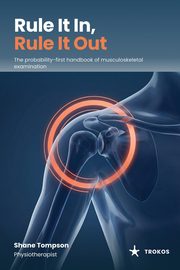
Get the book for the clinical reasoning behind each wrist and hand test it covers, and which carpal tunnel test to trust
These pages give the published figures. Rule It In, Rule It Out adds, for the tests in the chapter ‘The wrist and hand’: captioned drawings with the exact positions, the Rule-In / Rule-Out bar and evidence dots, a fuller interpretation of each test, and the clinical reasoning on which tests to use and in what order.
Look inside the book: free sample pages
Coming November 2026: 330 pages, paperback and PDF. Launch offer: subscribers get the PDF for A$39 instead of A$49, for the first two weeks after publication. Be first to know at launch
One study, one test, once a month
Rule It In is a free evidence letter for musculoskeletal clinicians: one recent study explained, one examination test with its real numbers. From Trokos, publisher of Rule It In, Rule It Out.
Free when you confirm your email: a one-page PDF of the strongest special tests to rule in and rule out, with tests that carry a caution flagged separately.
Launch offer for subscribers: the PDF edition of Rule It In, Rule It Out for A$39 instead of A$49, for the first two weeks after publication. Sign up free to get the code on launch day.
By subscribing you agree to receive Rule It In by email, about once a month. You will get a confirmation email first, and nothing is sent until you click it. Your address is stored by Kit (Kit.com, United States) and used only for this newsletter and the subscriber launch offer; Kit records which issues are opened and which links are clicked. Unsubscribe with one click in any issue. Privacy.